
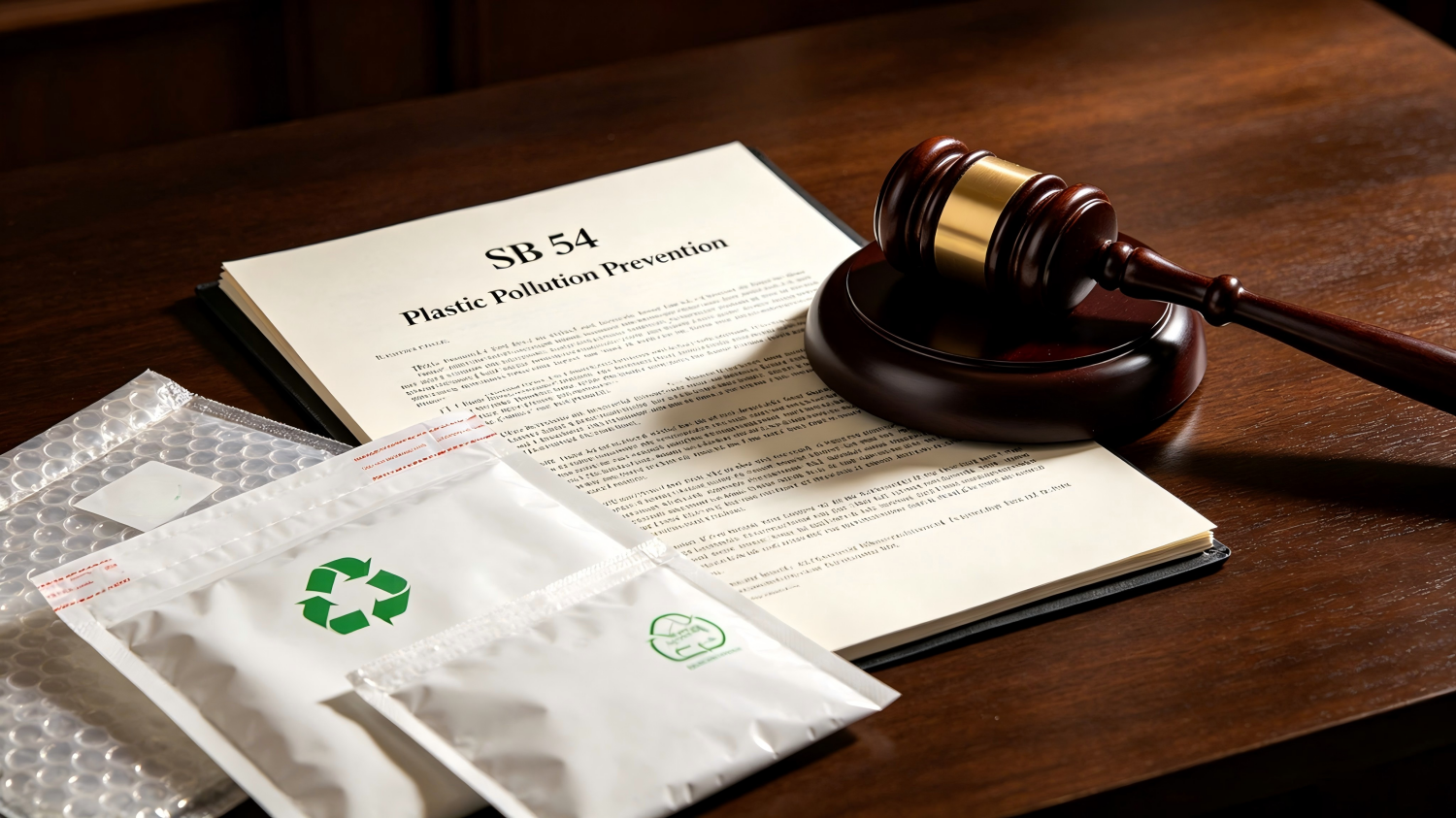
In August 2026, a coalition of 17 state attorneys general and the National Association of Wholesaler-Distributors filed a motion for preliminary injunction in the U.S. District Court for the Eastern District of California, seeking to suspend all enforcement of the Plastic Pollution Prevention and Packaging Producer Responsibility Act (SB 54) while the constitutional challenge proceeds. A hearing is scheduled for January 15, 2027.
The Plaintiff Coalition
Nebraska leads the coalition, joined by Alabama, Florida, Georgia, Idaho, Indiana, Iowa, Louisiana, Missouri, Montana, North Dakota, Oklahoma, South Carolina, South Dakota, Texas, Utah, and West Virginia.
Defendants include CalRecycle Director Zoe Heller and the Circular Action Alliance – California‘s sole designated Producer Responsibility Organization.
Core Constitutional Challenges
The plaintiffs assert that SB 54 violates multiple constitutional provisions:
-
Dormant Commerce Clause: California projects its policy preferences beyond its borders, unduly burdening and discriminating against interstate commerce and imposing unfairly apportioned taxes
-
First Amendment (Free Speech): The law prohibits producers from disclosing EPR fees as a separate line item on receipts or invoices, restricting speech; it also forces producers to join and fund CAA, constituting compelled association and speech
-
Import-Export Clause: The Act conditions entry of imported goods into California on the manufacturing or production practices used in other jurisdictions
-
Nondelegation Doctrine: California outsources legislative, regulatory, fee-setting, and enforcement power to an unelected private organization – CAA – violating federal and state nondelegation doctrines
-
Due Process Clause: The Act attempts to regulate conduct occurring outside California‘s borders, violating the Fifth Amendment‘s Due Process Clause
The SB 343 Connection
The amended complaint adds a new argument: SB 54‘s recyclability criteria reference Public Resources Code § 42355.51, four requirements of which were preliminarily enjoined by a federal court under SB 343 on July 14, 2026. Plaintiffs argue that because the recyclability standards underlying SB 54 have been enjoined, the entire EPR statute is rendered unconstitutionally vague.
Key Difference from the Oregon Case
The scope of this requested relief differs materially from the Oregon EPR case – where the preliminary injunction was limited to NAW and its members. The California motion seeks program-wide relief, applicable to all covered producers.
Current Status & Recommendations
As of now, SB 54‘s provisions remain fully in force. The motion has been filed but not granted. CAA is expected to issue its first round of invoices in early 2027.
Meanwhile, the Oregon EPR trial is nearing a verdict, which is widely expected to impact the trajectory of the California and other state EPR litigation.
Key Recommendations for Cross-Border Sellers and Packaging Suppliers:
-
Continue compliance preparations – The injunction has not been granted; compliance obligations remain in effect
-
Monitor litigation closely – The January 15, 2027 hearing will be a critical milestone
-
Assess compliance costs – Even if SB 54 is ultimately modified or overturned, the EPR compliance trend is irreversible
-
Choose a compliant partner – Xingyu Packaging has proactively built an international certification framework to provide clients with certified, verifiable green packaging solutions